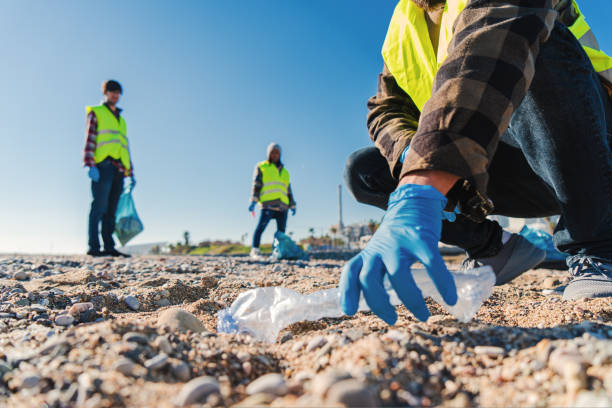
A biological hazard is an invisible, relentless threat. Whether your home has suffered a massive sewage backup, an infectious disease outbreak, or an accident involving severe blood loss, the contamination cannot simply be wiped away with soap and water. Microscopic pathogens like Hepatitis, MRSA, and E. coli can survive on surfaces for weeks, putting anyone who enters the environment at massive risk. We are your elite biohazard cleanup company in Roaring Spring, PA. We deploy highly trained technicians armed with hospital-grade sanitization technology to completely eradicate the biological threat, returning your property to a scientifically verified, sterile condition.
When you search for biohazard cleanup near me, you need a team that strictly adheres to OSHA’s Bloodborne Pathogen Standards. Blood and bodily fluids are highly infectious. If an untrained person attempts to clean a biological spill, they risk exposing themselves to lethal viruses. Furthermore, if blood seeps into porous materials like grout, carpet, or drywall, standard cleaning products will not reach it. The trapped matter will begin to rot, producing awful odors and cultivating bacteria. We utilize specialized enzymatic chemicals that digest biological matter at the microscopic level, destroying the pathogens completely.
Our biohazard cleanup services cover a wide range of dangerous environmental contaminations in Roaring Spring, PA:
We do not just rely on how a room looks or smells. To guarantee your safety, our biohazard clean up technicians use ATP (Adenosine Triphosphate) fluorescence testing. We swab the remediated surfaces and place them into a digital luminometer. This device detects the cellular energy of living microorganisms. We do not consider the job complete until the meter reads zero, providing you with scientific proof that your environment is completely sterile.
Never attempt to clean raw sewage, blood, or infectious waste on your own. Let our certified hazmat technicians eliminate the invisible threats safely and completely.
Call for immediate biohazard cleanup dispatch.
"Our basement was flooded with raw sewage. The smell was unbearable. The biohazard cleanup services team arrived the same day, extracted the waste, cut out the ruined drywall, and sanitized everything perfectly. The basement is completely clean and smells fresh."
"We needed a biohazard cleanup company after a severe medical emergency in our home. They were incredibly professional, discreet, and used specialized chemicals to clean the affected area. I felt so relieved knowing it was scientifically sanitized."
"They handled a very difficult cleanup involving severe animal waste. Excellent biohazard restoration cleanup. They didn't just clean it; they used machines that completely destroyed the horrible odor. Highly recommend them."
Roaring Spring was established around the Big Spring in Morrison's Cove, a clean and dependable water source vital to the operation of a paper mill. Prior to 1866, when the first paper mill was built, Roaring Spring had been a grist mill hamlet with a country store at the intersection of two rural roads that lead to the mill near the spring. A grist mill, powered by the spring water, had operated at that location since at least the 1760s. After 1867, as the paper mill expanded, surrounding tracts of land were acquired to accommodate housing development for new workers. The formalization of a town plan, however, never occurred. As a result, the seemingly random street pattern of the historic district is the product of hilly topography, a small network of pre-existing country roads that converged near the Big Spring, and the property lines of adjacent tracts that were acquired through the years for community expansion. The arterial streets of the district are now East Main, West Main, Spang and Bloomfield, each of which leads out of the borough to surrounding townships. Two of these streets — Spang and East Main — meet with Church Street at the district's main intersection called "Five Points." The boundaries of the district essentially include those portions of Roaring Spring Borough which had been laid out for development by the early 1920s. This area encompasses 233 acres (0.94 km2) or 55 percent of the borough's area of 421 acres (1.70 km2). Since the district's period of significance extends to 1944, most of those buildings erected after the 1920s were built as infill within the areas already subdivided by the 1920s. In the early 1960s, the borough began to annex sections of adjacent Taylor Township, especially to the east around the then new Rt. 36 Bypass.
Zip Codes in Roaring Spring, PA that we also serve: 16673